
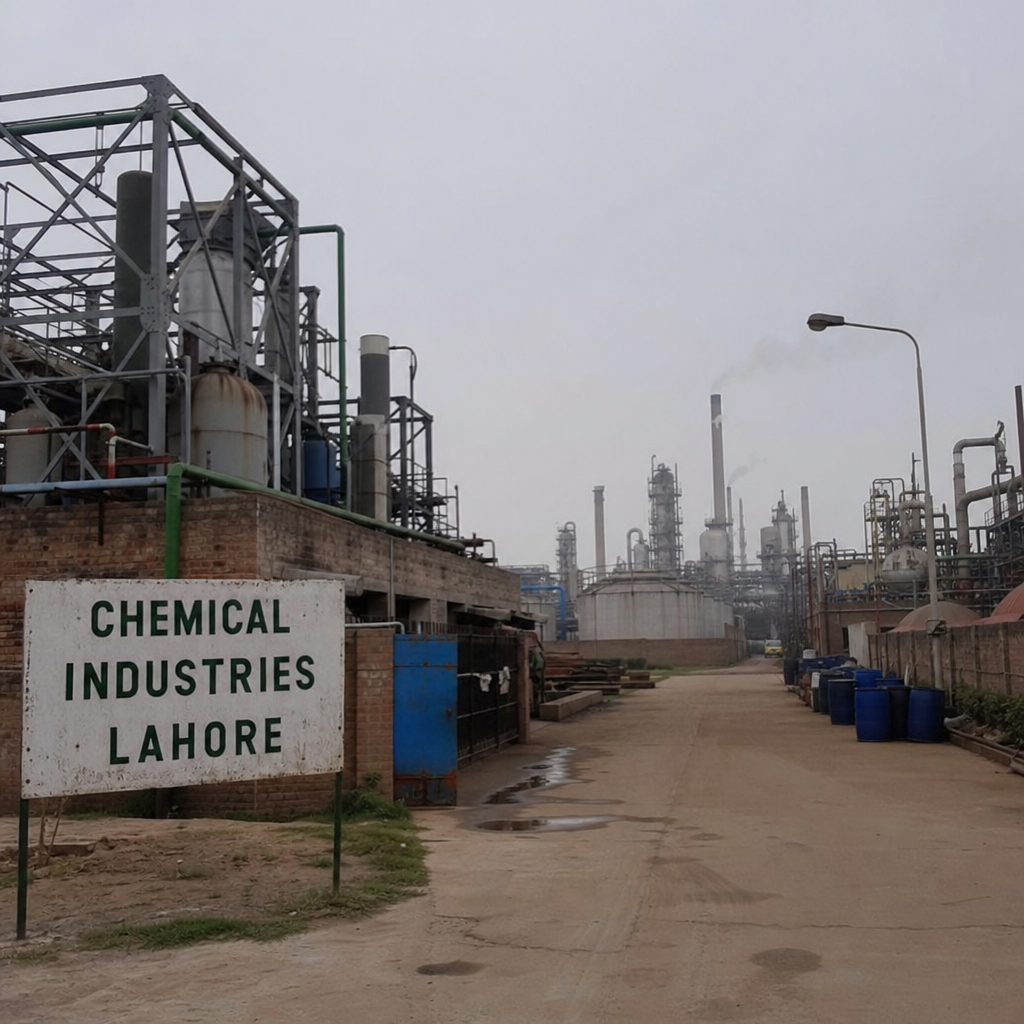
Chemical Industries in Lahore: Market, Jobs, Trends
Chemical industries in Lahore are growing because the city links manufacturing demand, trading networks, skilled labour, and planned industrial estates in one commercial region. For buyers, suppliers, job seekers, and investors, this growth matters because chemicals support textiles, paints, plastics, medicines, cosmetics, construction materials, agriculture, and many other sectors. The result is a market where established chemical companies, traders, distributors, and new plants all support Pakistan’s wider industrial base.
Why are chemical industries in Lahore growing?
Chemical industries in Lahore are growing because Lahore sits near major consumer markets, industrial zones, transport links, and downstream manufacturers that need chemical inputs again and again. Punjab’s industrial-estate network includes key sites such as Sundar Industrial Estate in Lahore, while Quaid-e-Azam Industrial Estate also hosts textiles, medicines, plastic ware, chemicals, rubber, foam, and cosmetics. These clusters make it easier for a chemical manufacturer to reach buyers, workers, logistics, and allied services without working in isolation. (icid.punjab.gov.pk)
Growth is also tied to the wide range of demand. A single chemical supplier in Lahore may serve textile processing, detergents, coatings, packaging, construction, water treatment, food-related processing, or lab users. This range reduces dependence on one customer type and pushes chemical companies to focus on quality, reliability, and technical support.
Lahore’s industrial base supports chemical manufacturing
The strength of chemical and manufacturing industries in Lahore comes from the city’s wider production system. Sundar Industrial Estate, on Sundar-Raiwind Road, is one of the most important planned industrial areas in the region and includes manufacturing activity such as inorganic chemicals. PIEDMC says Sundar has hundreds of factories in production and a large workforce, which is why the area is often mentioned when people search for chemical industries in Lahore Pakistan. (pie.com.pk)
Nearby industrial development also matters. Punjab’s official portal lists chemicals among the focus sectors for Quaid-e-Azam Business Park near Sheikhupura, along with medicines, plastics, food and beverages, electronics, and light engineering. This matters because Lahore’s chemical sector does not stop at the city line; many businesses work across Lahore, Sheikhupura, Raiwind, and other connected manufacturing belts. (punjab.gov.pk)

The Lahore chemical market is more than buying and selling
The Lahore chemical market is often seen as a trading space, but its real value is broader. It links importers, stockists, local producers, packaging suppliers, transporters, testing services, and end-user industries. For small manufacturers, this network can cut delays because key raw materials and substitutes may be found locally instead of waiting for every item to come from overseas suppliers.
This market also helps new buyers learn the difference between commodity chemicals and specialty chemicals. Commodity products may be bought mainly on price, availability, and purity, while specialty chemicals often need application knowledge, documentation, formulation support, and steady batch performance. That is why many chemical companies in Lahore try to build long-term customer ties rather than compete only on rates.
Main segments shaping the sector
Chemical industries in Lahore are not one single category. They cover a practical mix of manufacturing, blending, distribution, and technical supply. The most visible segments include:
- Industrial chemicals: Acids, alkalis, solvents, salts, and process chemicals used by factories and workshops.
- Textile and dyeing aids: Chemicals used in washing, dyeing, finishing, printing, and fabric treatment.
- Paints, coatings, and construction chemicals: Inputs for decorative paints, protective coatings, adhesives, sealants, and building materials.
- Pharma and cosmetic inputs: Ingredients, excipients, packaging-related chemicals, and hygiene-focused products, subject to relevant quality and regulatory requirements.
- Agriculture and water-treatment chemicals: Products used in crop-support systems, sanitation, cleaning, and process water management.
- Plastic, rubber, and foam chemicals: Additives, resins, pigments, fillers, and process aids for conversion industries.
These segments show why a list of chemical industries in Lahore can be hard to treat as a simple directory. Some firms are full-scale manufacturers, some are importers, some are distributors, and some are technical solution providers serving very specific industrial problems.
How do Lahore chemical companies compare with other cities?
Lahore chemical companies benefit from Punjab’s manufacturing depth, while Karachi has advantages linked to ports, large-scale imports, oil supply, and national distribution. Chemical manufacturing companies in Karachi often serve import-heavy, export-linked, and large industrial customers, whereas chemical industries in Lahore are closely tied to Punjab’s textile, packaging, medicine, construction, and consumer-goods supply chains. Chemical industries in Karachi, chemical industries in Faisalabad, and Lahore-based firms often complement each other rather than compete in the same way.
Faisalabad is especially important because of its textile base, which creates strong demand for dyes, aids, washing chemicals, and finishing solutions. Lahore, by contrast, has a wider commercial mix. It combines trading, corporate offices, industrial estates, technical sales teams, and access to multiple Punjab cities. For businesses comparing locations, the best choice depends on whether they need port access, textile customers, central Punjab distribution, or proximity to Lahore’s commercial decision-makers.
Chemical industry trends affecting Lahore
Several chemical industry trends are shaping how the sector grows. These trends are not limited to Lahore, but they influence how local companies plan production, hiring, compliance, and customer service.
First, customers increasingly ask for consistency. A buyer may forgive one late shipment, but repeated shifts in quality can disrupt an entire line. This pushes suppliers to improve sourcing, storage, testing, and documentation.
Second, environmental and safety expectations are becoming more visible. Punjab’s Environment Protection Department publishes EIA-related material for industrial projects, including chemical and manufacturing facilities, which reflects the role of environmental review in industrial development. For responsible companies, compliance is not only a legal issue; it protects workers, nearby communities, and long-term business stability. (epd.punjab.gov.pk)
Third, industry events are making the sector more connected. PakChem Expo presents itself as a major platform for Pakistan’s chemical and allied industries, bringing together suppliers, buyers, technology providers, and industry visitors in Lahore. Trade platforms like these help local firms see new products, green technologies, and specialty chemical solutions. (expo.pakchem.org)
Jobs and careers in Lahore’s chemical sector
Jobs in chemical industries in Lahore are not limited to chemists in labs. The sector needs production supervisors, quality-control staff, procurement officers, warehouse teams, safety officers, sales engineers, import documentation staff, machine operators, accountants, and logistics coordinators. This makes chemical industries in Lahore careers attractive for both technical and commercial candidates.
People searching for chemical industries jobs in Lahore should know what employers usually value. A candidate with basic chemical knowledge, careful documentation habits, and strong safety awareness can stand out even in entry-level roles. For sales and procurement jobs, product knowledge matters, but so does the ability to speak clearly with factories that need steady supply.
Useful career steps include:
- Build practical product knowledge. Learn common chemical names, uses, storage needs, and mixing issues.
- Understand safety basics. Read safety data sheets, handling instructions, labelling requirements, and emergency procedures.
- Improve documentation skills. Many roles involve invoices, batch records, import papers, test reports, or customer specifications.
- Visit industrial areas when appropriate. Exposure to real production environments helps candidates understand how chemicals are used.
- Follow relevant job channels. Search phrases such as jobs in chemical industries in Lahore and chemical industries in Lahore careers can help identify openings across manufacturing, trading, and distribution companies.
What buyers should look for in a chemical manufacturer
Buyers should choose a chemical manufacturer based on reliability, product fit, safety practices, and after-sales support, not price alone. A low-cost product can become expensive if it causes batch failure, equipment issues, delivery delays, or compliance problems. In chemicals, dependable supply often saves more money than a small discount.
Before selecting a supplier, buyers should check:
- Whether the company can explain product grades, uses, and limits clearly.
- Whether packaging is suitable for transport, storage, and safe handling.
- Whether documents such as specifications, safety data, and invoices are provided properly.
- Whether the supplier understands the buyer’s industry, not just the product name.
- Whether delivery commitments are realistic and consistent.
- Whether alternatives are suggested responsibly when the exact product is sold out.
This approach is especially useful for small and medium manufacturers that may not have large technical teams. The right supplier becomes a practical partner, helping the buyer avoid bad substitutions and unnecessary production risk.
Opportunities and challenges ahead
The future of chemical industries in Lahore depends on how well companies balance growth with quality, safety, and focus. Demand from textiles, construction, cleaning products, packaging, agriculture, cosmetics, and medicines can keep supporting the sector, but customers are becoming more selective. They want better documentation, cleaner handling, steady supply, and suppliers who understand industrial applications.
Challenges remain. Raw-material price changes, imported input dependency, energy costs, environmental requirements, and skilled labour gaps can all affect margins. Smaller chemical companies may feel these pressures more strongly, especially when they compete against larger suppliers with better storage, testing, and financing capacity.
Still, Lahore has a strong base. Its industrial estates, commercial markets, transport access, and connection to Punjab’s manufacturing cities give it a practical edge. For entrepreneurs, the opportunity is not only to sell chemicals, but to solve real production problems with dependable products, technical knowledge, and professional service.
Key takeaway
The growth of chemical industries in Lahore reflects the city’s role as a manufacturing and trading hub for Punjab and Pakistan. From the Lahore chemical market to planned industrial estates, the sector supports many downstream industries and creates opportunities for suppliers, buyers, and job seekers. Businesses that invest in quality, compliance, safety, and customer education will be better placed as Lahore’s chemical sector becomes more competitive and more focused.
Related Articles
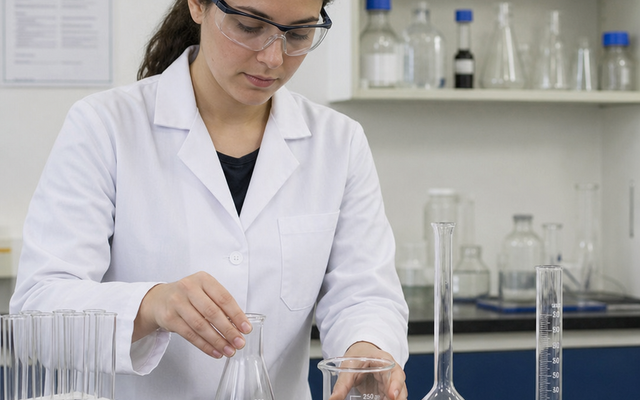
What laboratory equipment does every scientist need?
Every scientist needs a reliable set of tools that makes daily work safer, cleaner, and more repeatable. From basic laboratory glassware to specialized lab instruments, the right setup helps you measure, mix, heat, observe, store, and document with confidence. This guide walks through essential laboratory equipment, practical glassware types, cleaning needs, and smart buying considerations…
Read More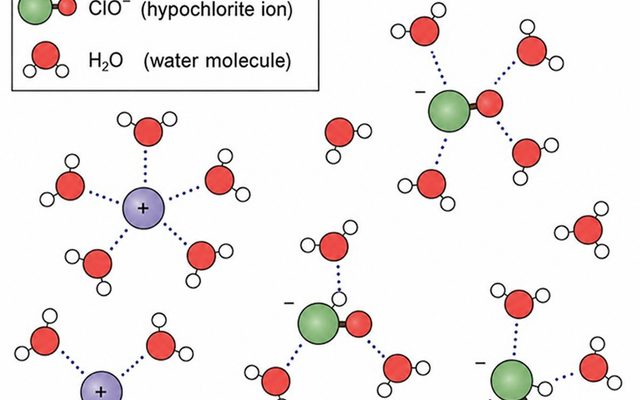
Understanding the Sodium Hypochlorite Formula
Understanding the Sodium Hypochlorite Formula Sodium hypochlorite is best known as the active ingredient in many bleach products, but its chemistry is more specific than the word “bleach” suggests. The sodium hypochlorite formula, NaOCl, tells you what elements are present, how the compound behaves in water, and why it is useful for cleaning, disinfection, deodorizing,…
Read More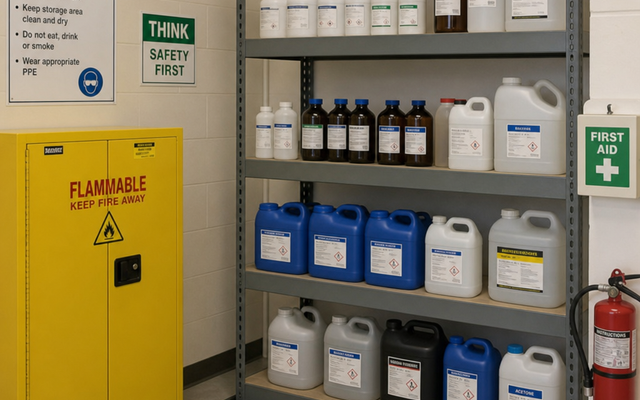
Chemical Shop Near Me: What to Check First
Chemical Shop Near Me: What to Check First Searching for a chemical shop near me is about more than distance. You want the right grade, clear labels, safe handling help, and stock you can trust. Whether you need chemicals for manufacturing, cleaning, labs, farming, cosmetics, textiles, water treatment, or resale, the right supplier makes buying…
Read More